ERP SYSTEM FOR GROWING BUSINESSES
ERP Systems for Growing Businesses: The Ultimate Guide to Scaling Operations Efficiently
Introduction
Growth is every entrepreneur's dream.
When a business begins attracting more customers, generating more sales, hiring more employees, and expanding into new markets, it is often viewed as a sign of success. However, growth also introduces new challenges. Processes become more complex, departments become disconnected, data becomes scattered, and managing daily operations becomes increasingly difficult.
Many growing businesses find themselves struggling with inefficiencies despite generating more revenue.
The reason is simple: the systems that worked when the business was small often fail when the business starts scaling.
This is where Enterprise Resource Planning (ERP) systems become invaluable.
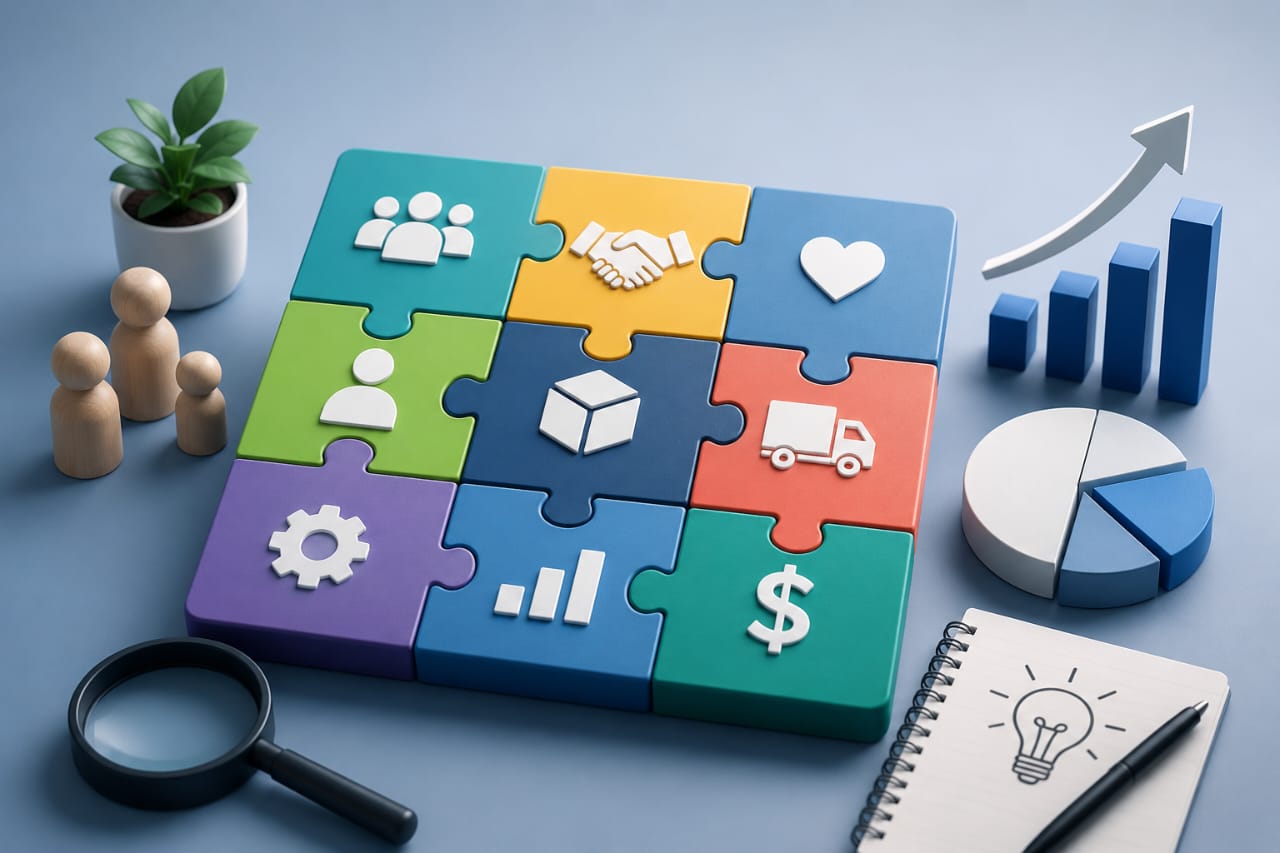
An ERP system helps businesses manage and integrate critical operations through a single platform. Instead of using multiple disconnected tools for accounting, inventory, sales, customer management, procurement, and human resources, businesses can centralize everything in one system.
For growing businesses, ERP is not merely a technology upgrade—it is a strategic investment that supports efficiency, scalability, and long-term success.
In this guide, we'll explore what ERP systems are, why they matter, how they benefit growing businesses, and how to successfully implement them.
---
What Is an ERP System?
ERP stands for Enterprise Resource Planning.
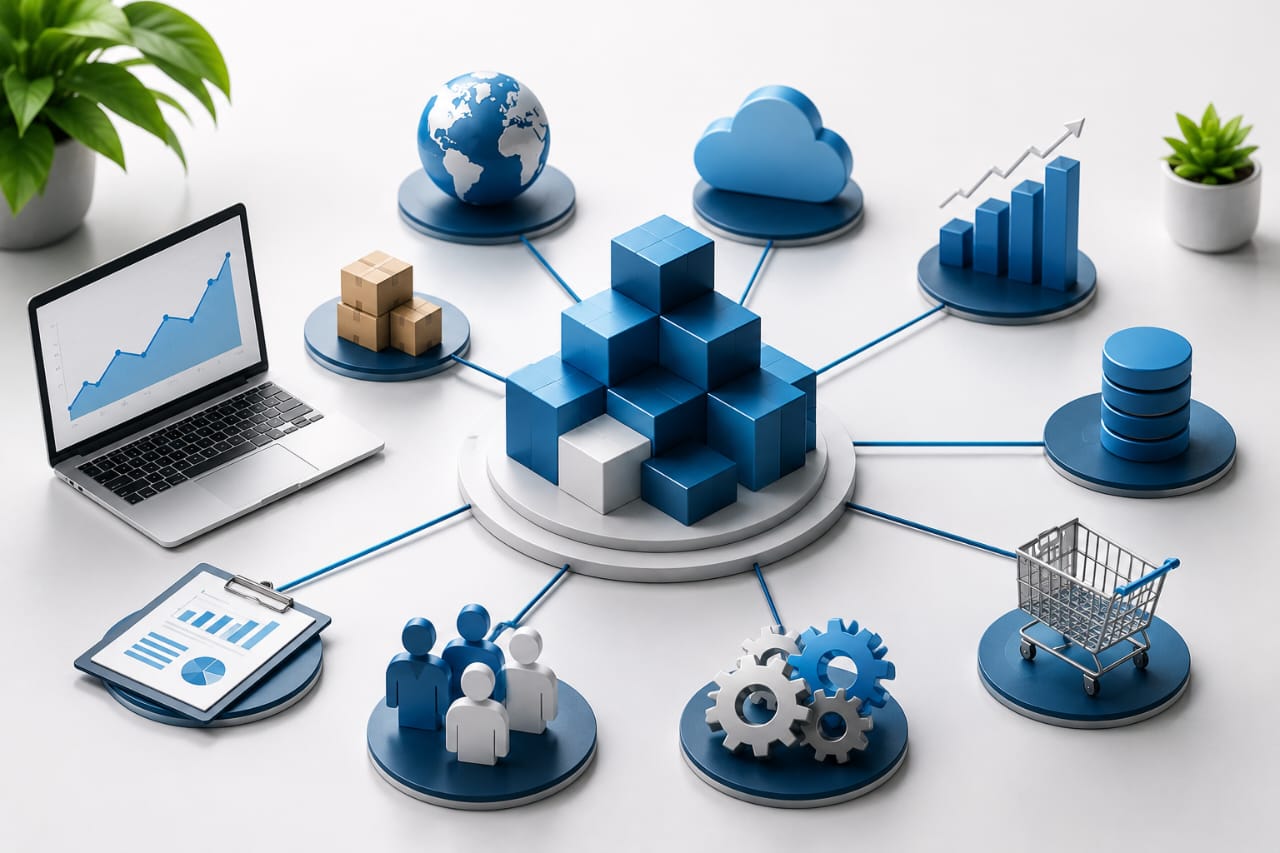
An ERP system is a software platform that integrates various business functions into a unified system.
Rather than operating different departments independently, ERP connects them through a shared database and centralized workflows.
Typical ERP modules include:
- Finance and Accounting
- Human Resources
- Sales Management
- Inventory Management
- Procurement
- Customer Relationship Management (CRM)
- Manufacturing
- Supply Chain Management
- Project Management
By bringing these functions together, ERP creates a single source of truth across the organization.
Everyone works with the same data, reducing confusion and improving collaboration.
---
Why Growing Businesses Need ERP Systems
Many business owners assume ERP systems are only for large corporations.
This is a misconception.
In reality, ERP systems often provide the greatest value to growing businesses because they help manage complexity before it becomes overwhelming.
As businesses grow, they typically experience challenges such as:
- Duplicate data entry
- Poor communication between departments
- Delayed reporting
- Inventory inaccuracies
- Customer service inefficiencies
- Cash flow visibility issues
- Manual processes
Without proper systems, growth can become chaotic.
ERP systems help businesses maintain control while continuing to expand.
---
Signs Your Business Needs an ERP System
Many business owners wonder when it is time to invest in ERP software.
Here are common warning signs:
1. You Use Multiple Unconnected Software Applications
If accounting, inventory, sales, and customer data exist in separate systems, employees waste time switching between platforms.
Disconnected systems often create errors and inconsistencies.
---
2. Reporting Takes Too Long
If generating reports requires manually collecting data from different departments, your business may have outgrown its current systems.
ERP provides real-time reporting and analytics.
---
3. Inventory Management Is Becoming Difficult
Stock shortages, overstocking, and inaccurate inventory records are common symptoms of inadequate systems.
ERP helps businesses track inventory accurately across locations.
---
4. Customer Service Is Suffering
Customers expect quick responses and accurate information.
ERP systems give teams instant access to customer data, improving service quality.
---
5.5. rowth Is Creating Operational Challenges
When growth starts creating more confusion than efficiency, it may be time to invest in an ERP solution.
---
Core Benefits of ERP Systems for Growing Businesses
Improved Efficiency
ERP systems automate repetitive tasks.
Instead of manually entering data into multiple systems, information is entered once and shared across departments.
This reduces:
- Administrative workload
- Errors
- Delays
- Operational costs
Employees become more productive because they spend less time on routine tasks.
---
Better Decision-Making
Business decisions should be based on accurate data.
ERP systems provide real-time insights into:
- Sales performance
- Revenue trends
- Customer behavior
- Inventory levels
- Operational efficiency
Managers gain access to dashboards and reports that support faster and smarter decision-making.
---
Enhanced Collaboration
Departments often operate in silos.
Sales may not know inventory levels.
Finance may not have updated customer information.
Operations may lack visibility into procurement activities.
ERP systems create a shared environment where information flows seamlessly between departments.
This improves teamwork and coordination.
---
Increased Customer Satisfaction
Customers value:
- Fast responses
- Accurate information
- Reliable delivery
ERP systems help businesses meet these expectations by providing a complete view of customer interactions and operational status.
Better customer experiences often lead to:
- Higher retention
- More referrals
- Increased revenue
---
Scalability
One of the greatest advantages of ERP systems is scalability.
As businesses grow, ERP platforms can expand alongside them.
New:
- Users
- Departments
- Products
- Locations
can be added without rebuilding operational systems from scratch.
---
Key ERP Modules Every Growing Business Should Understand
Financial Management
Finance is the backbone of every business.
ERP financial modules typically include:
- General ledger
- Accounts payable
- Accounts receivable
- Budgeting
- Financial reporting
- Cash flow management
These tools provide greater visibility into financial performance.
---
Customer Relationship Management (CRM)
CRM modules help businesses manage customer interactions.
Capabilities include:
- Lead tracking
- Sales pipeline management
- Customer communication history
- Marketing integration
- Customer support tracking
Strong customer relationships drive sustainable growth.
---
Inventory Management
Inventory management is critical for businesses selling products.
ERP inventory tools provide:
- Stock tracking
- Reorder alerts
- Warehouse management
- Inventory forecasting
This minimizes stockouts and excess inventory.
---
Procurement Management
Procurement modules help businesses manage purchasing activities.
Features often include:
- Supplier management
- Purchase orders
- Vendor performance tracking
- Contract management
Effective procurement reduces costs and improves supplier relationships.
---
Human Resource Management
As teams grow, HR complexity increases.
ERP HR modules support:
- Recruitment
- Payroll
- Performance management
- Attendance tracking
- Employee records
This streamlines workforce management.
---
Cloud ERP vs On-Premise ERP
Businesses considering ERP implementation typically choose between cloud-based and on-premise solutions.
Cloud ERP
Cloud ERP systems are hosted online and accessed through the internet.
Advantages include:
- Lower upfront costs
- Faster implementation
- Remote accessibility
- Automatic updates
- Greater flexibility
For most growing businesses, cloud ERP offers significant advantages.
---
On-Premise ERP
On-premise ERP is installed on company-owned servers.
Advantages include:
- Greater control
- Extensive customization
- Internal data hosting
However, it often requires higher upfront investment and IT expertise.
---
Common ERP Implementation Challenges
ERP implementation is a major project.
Businesses often encounter challenges such as:
Resistance to Change
Employees may resist adopting new systems.
People often feel comfortable with familiar processes.
Strong communication and training are essential.
---
Poor Planning
ERP projects can fail when businesses implement software without clear goals.
Success requires:
- Strategic planning
- Stakeholder involvement
- Realistic timelines
---
Data Migration Issues
Moving data from legacy systems can be complex.
Incomplete or inaccurate data can reduce ERP effectiveness.
Data should be cleaned and verified before migration.
---
Insufficient Training
Employees cannot use tools they do not understand.
Comprehensive training significantly improves adoption rates.
---
How to Successfully Implement an ERP System
Step 1: Define Business Objectives
Start by identifying what you want to achieve.
Examples include:
- Improving efficiency
- Reducing costs
- Enhancing customer service
- Increasing visibility
Clear goals guide implementation decisions.
---
Step 2: Assess Current Processes
Review existing workflows.
Identify:
- Bottlenecks
- Manual processes
- Duplicate tasks
- Communication gaps
Understanding current challenges helps determine ERP requirements.
---
Step 3: Select the Right ERP Solution
Evaluate vendors based on:
- Features
- Scalability
- User experience
- Industry suitability
- Cost
- Support services
Choose a solution aligned with your business needs.
---
Step 4: Build an Implementation Team
Include representatives from:
- Finance
- Operations
- Sales
- HR
- IT
Cross-functional participation improves project success.
---
Step 5: Train Employees
Invest heavily in training.
Provide:
- Workshops
- Documentation
- Practical exercises
- Ongoing support
Confident employees adapt faster.
---
Step 6: Monitor Performance
After implementation, track key performance indicators such as:
- Productivity improvements
- Cost reductions
- Customer satisfaction
- Reporting accuracy
- Employee adoption rates
Continuous monitoring ensures long-term value.
---
Popular ERP Features Businesses Should Prioritize
When evaluating ERP solutions, look for:
Real-Time Dashboards
stant visibility into business performance.
---
Mobile Accessibility
Access information from anywhere.
---
Automation Tools
Reduce manual workloads.
---
Reporting and Analytics
Transform data into actionable insights.
---
Integration Capabilities
Connect ERP with:
- E-commerce platforms
- Payment systems
- Marketing tools
- CRM software
---
Security Features
Protect sensitive business information through robust security controls.
---
The Future of ERP Systems
ERP technology continues to evolve rapidly.
Modern ERP platforms increasingly incorporate:
Artificial Intelligence
AI helps businesses:
- Forecast demand
- Predict sales
- Identify risks
- Automate workflows
---
Machine Learning
Machine learning improves decision-making through continuous analysis of business data.
---
Advanced Analytics
Businesses gain deeper insights into:
- Customer trends
- Operational performance
- Financial forecasting
---
Internet of Things (IoT)
Connected devices provide real-time operational data.
This improves visibility across supply chains and production environments.
---
How ERP Supports Long-Term Business Growth
Growing businesses face increasing complexity.
Without strong systems, growth can lead to:
- Operational inefficiencies
- Customer dissatisfaction
- Financial mismanagement
- Poor decision-making
ERP systems provide the structure necessary to support sustainable growth.
They help businesses:
- Improve efficiency
- Enhance collaboration
- Increase profitability
- Deliver superior customer experiences
- Scale confidently
Rather than reacting to problems as they arise, ERP enables proactive management and strategic growth.
---
Conclusion
Growth is exciting, but it also creates new challenges.
As businesses expand, manual processes and disconnected systems become obstacles to success.
ERP systems provide a powerful solution by integrating business operations, improving visibility, increasing efficiency, and supporting better decision-making.
For growing businesses, ERP is not simply software—it is a foundation for sustainable expansion.
The right ERP system can help businesses streamline operations, improve customer satisfaction, strengthen financial management, and prepare for future opportunities.
While implementation requires planning, investment, and commitment, the long-term benefits often far outweigh the costs.
Businesses that embrace ERP technology position themselves to operate smarter, scale faster, and compete more effectively in an increasingly digital economy.
At BusinessBuddy, we believe that sustainable business growth requires the right combination of strategy, systems, and technology. By understanding and leveraging ERP systems effectively, businesses can build stronger foundations for long-term success and future growth.